

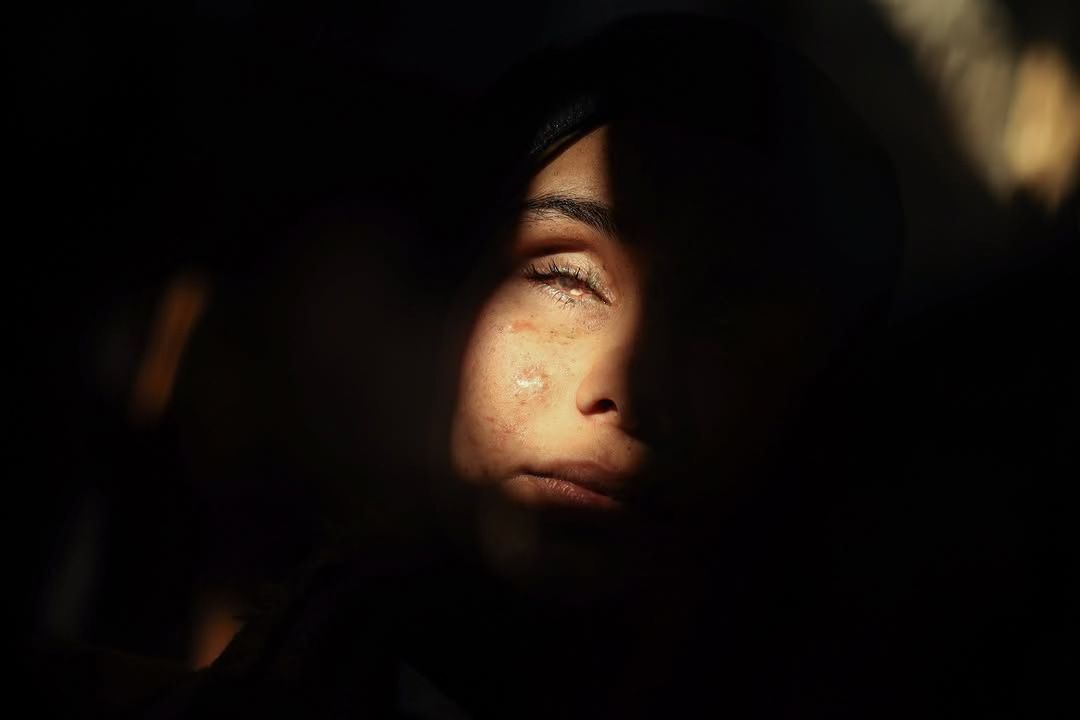
“Our days before the war were beautiful, and we had so many dreams. But then the bombing happened, and I lost an eye and a leg, and was left unable to do anything,” says Farah Mahmoud al-Kahlut, just seventeen, from north of Gaza City.
In an instant, at home in Jabalia, Farah lost her parents, her leg, and her sight in both eyes, struck by an airstrike ordered from afar. Nearly a year and a half later, she waits for treatment delayed for months, in a city of displacement, destruction, and shattered lives, where movement is restricted and life itself has been uprooted.
Her story, just one of thousands, is marked by unimaginable loss — but above all, by the quiet determination to survive and to hold onto hope, even when it feels nearly impossible to do so.
Life under occupation
Farah grew up in Jabalia, one of Gaza’s oldest refugee camps, where life was crowded, uncertain, and fragile. Generations of families who had been uprooted in 1948 lived here, carving out homes, schools, and moments of joy in the shadow of displacement.
Living in this fragile environment, Farah’s community endured the first massacre in 1967 — nearly 20 years before the first major resistance movements against Israeli occupation — and bore the brunt of repeated waves of violence in the decades that followed.
Violence was a constant. Thousands of civilians were killed, the imposed blockade made survival a daily struggle, and reports of war crimes — and even crimes against humanity — committed by the occupying forces continued to emerge, most recently in 2022.
But life went on. Families adapted, children went to school, and young people married and started families.
Daily life unfolded in a neighborhood where more than 120,000 people were packed into just 1.4 square kilometers (barely over half a square mile), with electricity both restricted and unreliable, often-contaminated water, and few opportunities for work. Every day carried the constant shadow of sudden destruction, as if the sky could collapse at any moment.
Then came the latest onslaught, genocidal in nature and more devastating than anything the community had endured before. At the heart of it all, among countless other innocent lives, was Farah — a teenage girl with her whole life ahead of her.
Blind faith
Under siege, Farah and her family had nowhere to hide. During repeated strikes on her neighborhood, an airstrike completely obliterated the house where she and her family had taken shelter.
More than 25 people in and around the home were killed, including both of her parents. From the rubble and panic, Farah and her brother were pulled out with severe injuries. And in this new state of devastation and searing pain, she fell into a coma that lasted nearly a week.
“I don’t remember anything...
When I woke up and asked them about my injuries, they told me I had lost both my eyes, but they didn’t mention my leg.”
Only after some time had passed did she realize she had lost her leg. Unable to feel her legs at the time, she didn’t even realize it. In that instant, with no sense of justice or recourse, everything was taken from her: her dreams, her aspirations, her desire to study, and even her ability to walk and see the world as she once did.
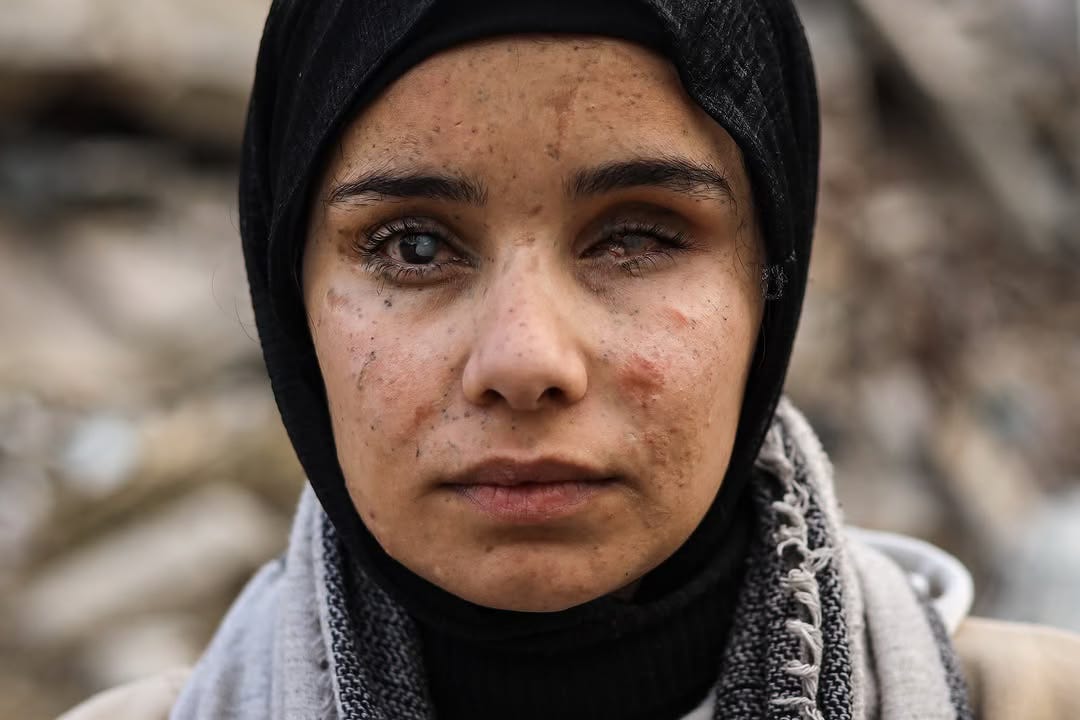


Farah’s experience reflects a shared reality for more than 170,000 Palestinians injured in Gaza today — all civilians, including tens of thousands of children whose lives are shattered before reaching adulthood.
She is one of thousands of children left without parents and permanently disabled by violence, her body and life marked by decades of occupation, repeated bombardment, and confinement to Gaza’s crowded refugee camps.
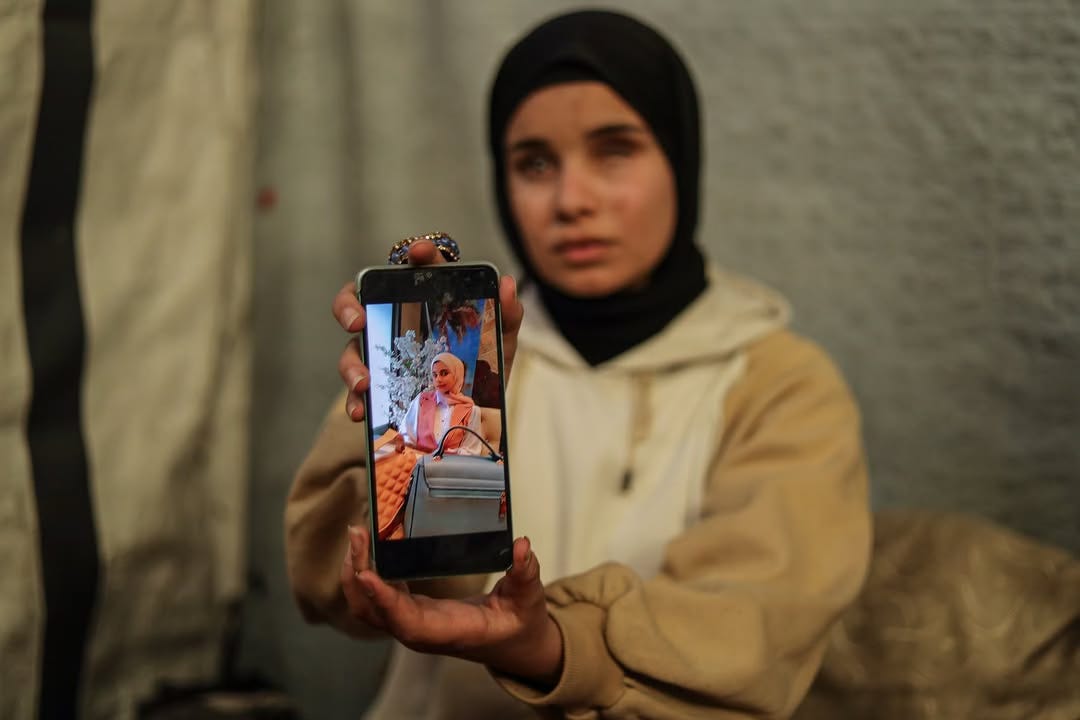
For children like Farah, the loss reaches beyond the scars etched on their bodies to the erasure of a future once imagined — an education cut short, ambitions deferred, and the ability to grow up and live even a semblance of a “normal” life stripped away.
“I want to leave to receive treatment. I want to see again and achieve all of my dreams. But I have been deprived of everything. I was even deprived of taking my high school exams.”
In nearly every shot, she can be seen connecting her current state of trauma to her dream of returning to school, drawing, and studying with her friends as she once did. A future erased, yet painfully present in her mind, and still, the hope for that future refuses to fade.
But even as she dreams of going back to school, sitting among her classmates, and reclaiming the life she once imagined, she remains trapped amid the rubble of her destroyed home, waiting for the border to open and uncertain if she has any chance of saving one of her eyes.
Trapped in displacement
Today, Farah is trapped — not only beneath the weight of her injuries, but within a Gaza where movement in and out has long been restricted. For her, the chance of saving one of her eyes depends not only on healing, but on whether a border will ever open.
“After they examined my eyes, they said one would need to be removed, and the other had a chance of surviving. I was supposed to have surgery six months later. Now it has been over a year, and it hasn’t happened,” she says, speaking from what remains of Jabalia.
“I have a medical referral for evacuation and I am waiting for the border crossing to open.
Every time we feel happy and say the crossing will open, and then it closes again, and our dreams continue to come to an end.”
Blessed to hold one of the few medical referrals for evacuation, Farah nonetheless remains trapped where the bombing claimed her family and destroyed her home. That home, once a place of “refuge,” now lies surrounded by ruins.


Just like Jabalia, Farah’s life has been turned upside down since the strike.
Her hopes and dreams have been taken from her, and meanwhile, she waits for treatment that could save one of her eyes and allow her to reclaim even a small part of her life.
“I’m still waiting, yet nothing has changed.”
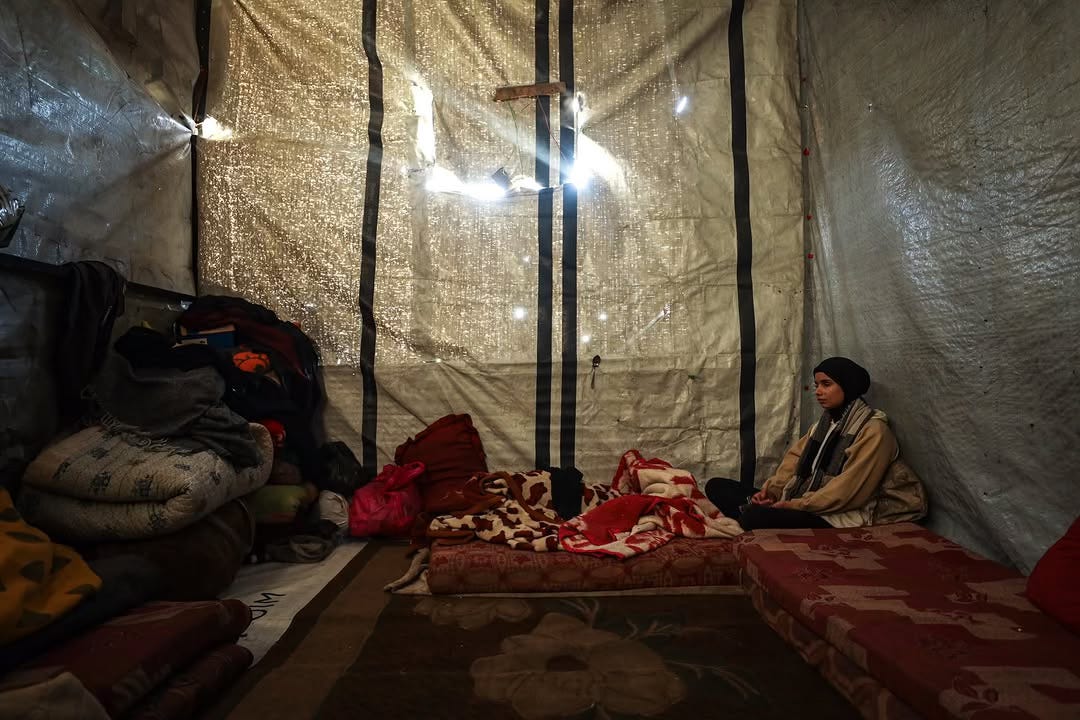
Living in a tent beneath a damaged building, Farah has appealed to the international community, “I am asking anyone who can help with my referral or help me travel for treatment, so that hope can return to my eye. I want to be treated so that hope can return to my eyes.”
But that hope now rests on the scheduled opening of the border this week — a promise that has repeatedly fallen short. Since April 2024, only around 70 people have been able to cross through the Rafah border. Promises of passage have been delayed or denied, leaving Farah and countless others in limbo, waiting for treatment that could restore not just her sight, but a measure of life itself.