

Just a few days ago, Rotana al-Raqab returned to Gaza carrying not relief, but the weight of humiliation. Barred from her home for over 20 months, even then, as the city stretched before her and her family waited beneath her, she could not step down into the crowd without restraint.
Before greeting her family, before taking in the streets and buildings she had longed to see, she raised her voice in distress:
“No to forced migration.
No one should leave Gaza. Not a single person should think of leaving Gaza. It’s death, death, death. Not a single person should think of leaving Gaza.
No to forced migration.”
Her words, a cry of deprivation, spread across the Gaza Strip, defying the occupying power that has long denied Palestinians their right to return.
The depth of her suffering reached far beyond Gaza’s ever-shifting borders, her pain visible in every frame and her story emblematic of the reality Palestinians are forced to live with each day.
Humiliation at the border
At first, relief really did wash over Rotana and her mother as they entered the Gaza Strip. They were greeted warmly by the Palestinian Embassy, and the entry procedures moved forward quickly. After a long, exhausting day, it finally felt as though things were going smoothly — as if their homecoming was within reach.
They imagined stepping back into their home, reuniting with their family, and sharing the gifts they had brought from Egypt.
But that brief moment of relief was shattered when they were told Israeli forces would take control of the transfer.
“When the Israeli forces took us, they tied our hands together, blindfolded us, and took us to an integration point.”
In that instant, their fear and uncertainty became all too real.
Rotana, her mother, and a neighbor traveling with them were taken into custody and interrogated by the Israeli occupying forces.
“They started asking us questions about things we know nothing about, and have nothing to do with.”
Subjected to the interrogation Palestinians face routinely, Rotana and her family were bombarded with questions about why they left, why they were returning, and, beyond that, their connection to Hamas and October 7th — just about every topic the forces could throw at them.
Then came the threats from the forces, sharp and relentless:
“You will never again in your life enter Gaza. Gaza is ours.”
“Why don’t we go get your children and you can all leave Gaza? In this instance, we will give you your children and you can leave.”
“The peace plan you people are talking about does not exist. We are going to displace the people of Gaza and take over Gaza.”
Having left Gaza to help her mother undergo an urgent heart operation, upon her arrival, this was the harsh reality Rotana faced: the very soldiers who had menaced her were the gatekeepers to her children — her only path to them ran through their intimidation, harassment, and control.
“They put psychological pressure on us. They would grab us. They raised their weapons at us. They threatened to detain us, to keep us from seeing our children, and that we would never see Gaza again. They threatened us in every single way.”
And still, in the face of relentless threats and psychological pressure, Rotana remained focused on making it home, determined to endure whatever it took to be reunited with her family.
Part of that meant leaving behind nearly everything they had brought with them. “Everything was forbidden,” says Rotana. They weren’t even allowed to carry basic necessities.
“Food was forbidden. Water was forbidden. Perfume was forbidden. Anything entering Gaza is forbidden.”
Beyond these restrictions, Rotana and her mother weren’t even allowed to bring the essential medication she needed after her procedure, or the gifts they had hoped would bring joy to their children.
“They emptied everything from our stuff and promised us nothing in return. They only allowed us to pass with clothes — one bag per person, just one bag each.”
Yet, after three hours of grueling integration, Rotana and her mother finally returned to Gaza, reunited with their family and once again able to step foot on Palestinian soil.
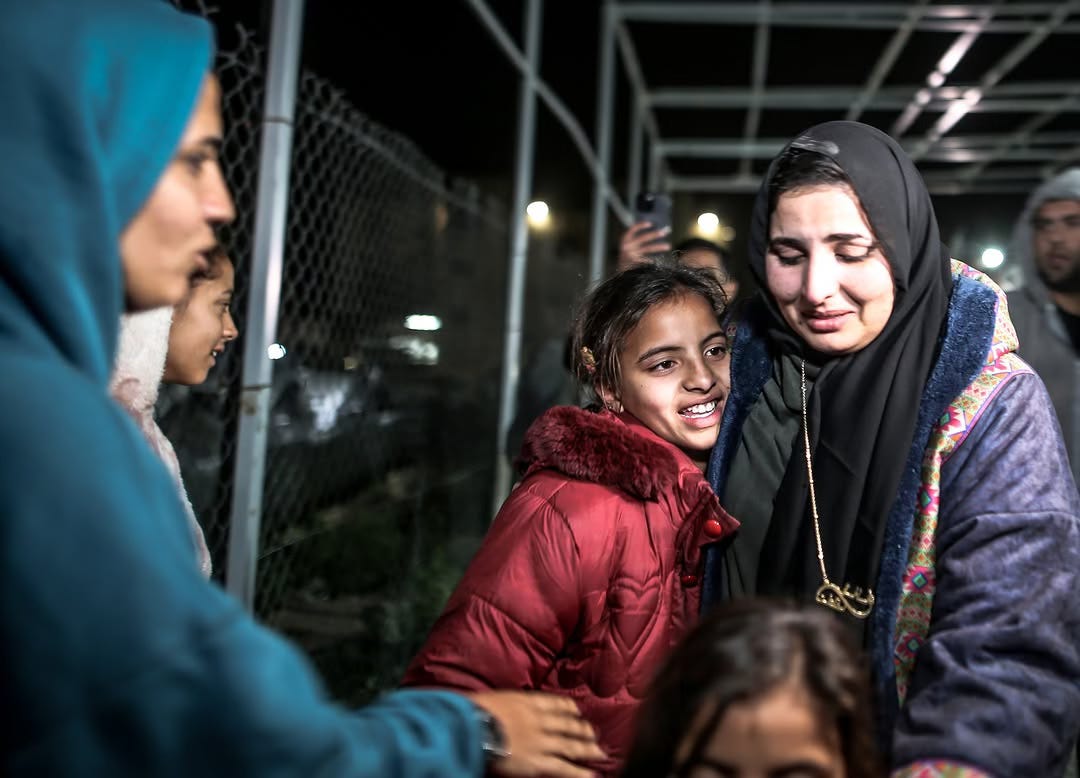
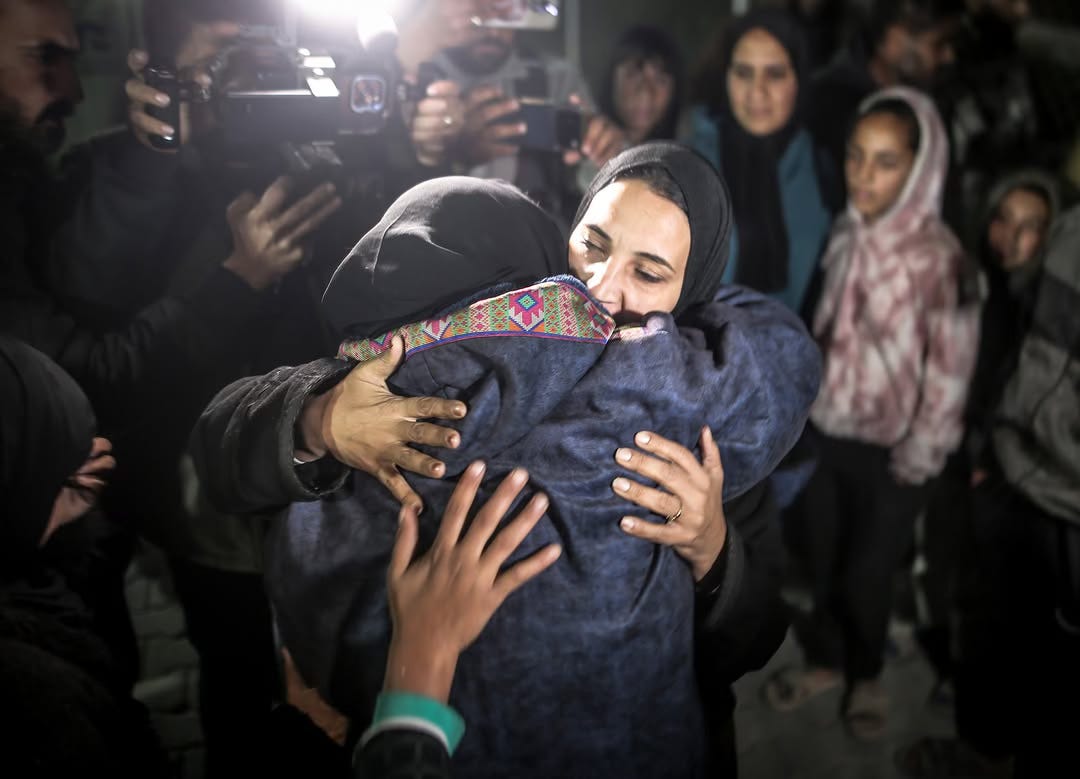
“It was a terrible day for us, but all praise is due to Allah. He intervened by sending the United Nations, and they came and took us, bringing us to the area where the Nasser Hospital is located.”
That day of humiliation, that relentless stripping away of dignity, was not an isolated incident. For Rotana, it was a stark reminder of the inescapable reality of occupation — where even the smallest comforts are denied and basic human rights are withheld.
For Palestinians, the journey home is rarely one of long-awaited relief; instead, it becomes another step in a long line of indignities endured simply to live on their own land.
“Where is the so-called ‘yellow line?’”
This is a question Palestinians have been trying to answer for months on end. One day the line is in place, the next it shifts, and the day after it appears to stand still — until it doesn’t.
Every morning, families wake up unsure whether the yellow boulders marking Israeli occupation will inch closer, swallowing more land, more homes, and more lives.
Never did Rotana and her mother imagine this measure of uncertainty would reach them upon their return to Gaza.
“When I left my family, they were at home. The house was within the yellow line, and they were at home. [But] I returned to find them in a tent. In a tent — they can no longer return home.”
The conditions, she says, were beyond description.
“I can’t even describe to you how bad the tent was.”
The yellow line had shifted, and with it, so did the very meaning of home. Today, a makeshift tent of canvas and poles replaces the walls that once sheltered her family.
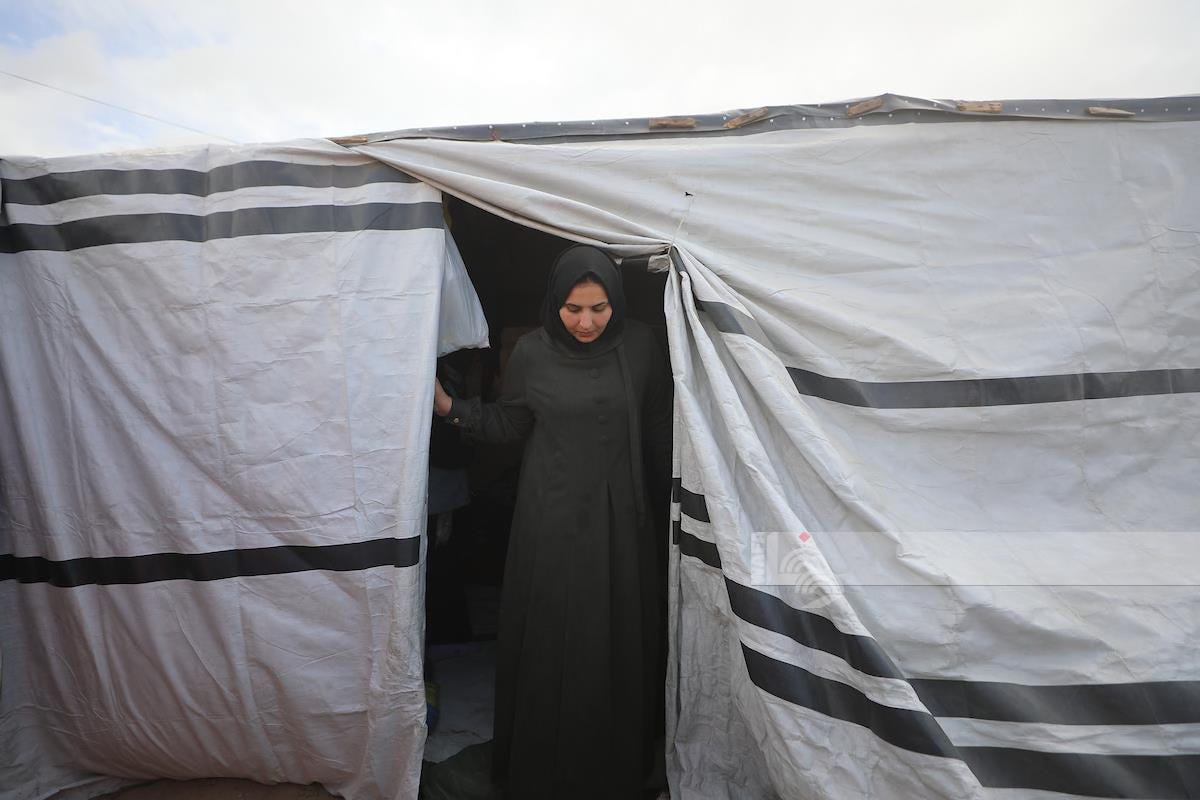
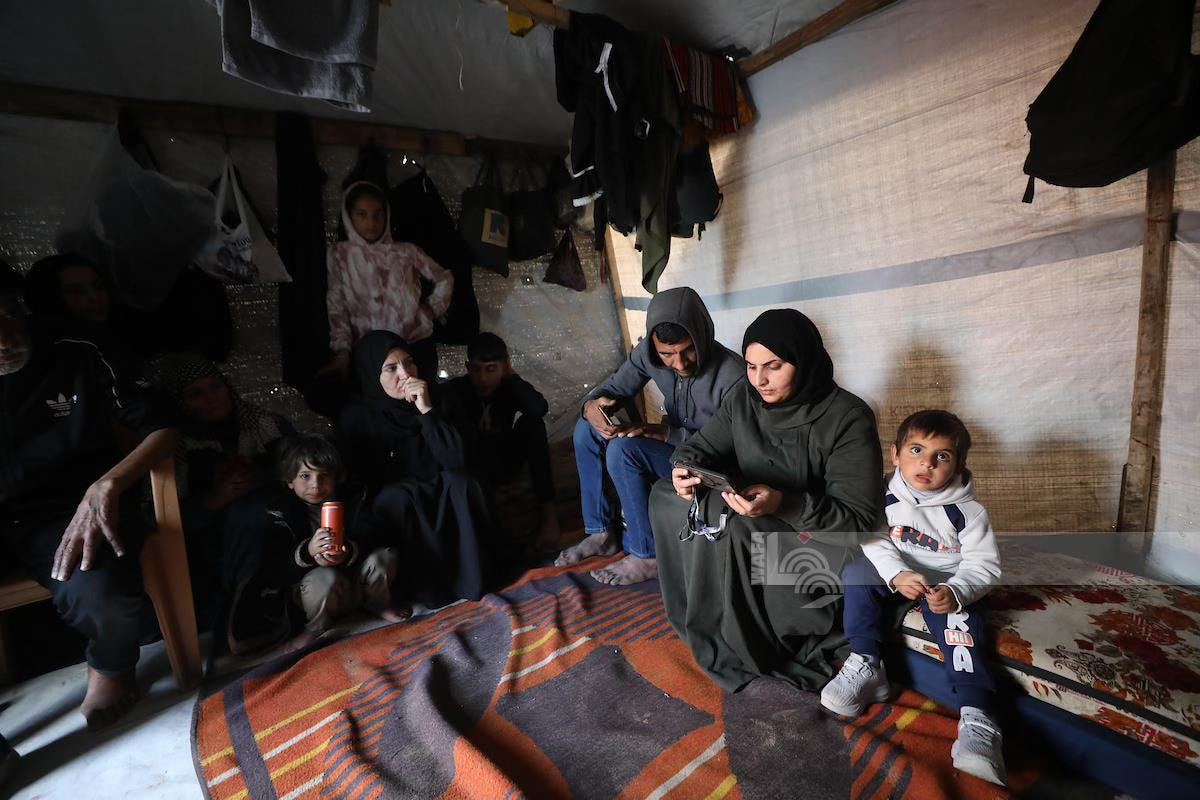
Less a home than a daily battle for survival, the tent is overcrowded and exposed, sheltering multiple families without protection from the cold nights or the suffocating heat to come.
There is no privacy, no sanitation, no safety, and no sense of dignity for those displaced across the Gaza Strip.
Just as her experience of humiliation is not unique, neither are these conditions. Across the Gaza Strip, between 1.5 and 2 million Palestinians are now living in makeshift tents, displaced not only by bombardment, but by the shifting line that renders homes uninhabitable day after day.
The line moves, and people are expected to move with it, carrying nothing but what they can hold.
And so, for Palestinians, what remains is a landscape of tents pitched where homes once stood — a population rendered temporary on its own land, and a system that renders displacement an everyday, inescapable reality.
Even amid displacement and despair, her voice endures
Through all of the pain and suffering, we have seen the Palestinian people stand firm in their dignity, and firm in their faith.
Perhaps that is why hearing stories like Rotana’s is so devastating — to watch a woman, so human and so innocent, endure bombardment and brutality at the hands of occupying soldiers, simply for trying to return home.
And yet, like her brothers and sisters who endure the same daily humiliations, Rotana has found the courage to speak out, refusing to let fear or oppression silence her.
“I want to relay this message to you all:
You must return to Gaza. You must return. No matter if they continue to oppress us. No matter what they do. We need to come back. This is your homeland.”
In that tent, Rotana spoke not just to plead. She embodied resilience, bore witness to the steadfastness in faith of her people, and affirmed an unbreakable connection to home. Even further, her words carried a summons to recognize the humanity of the displaced, to honor the Palestinian cause, and to stand alongside them.
“Don’t abandon Gaza.”
“Don’t abandon our Palestinian cause.”
Her words serve as a reminder that the struggle for dignity, justice, and the rights of those living under Israeli occupation is not theirs alone; it is a responsibility that belongs to all of us.
Together, in the shadow of displacement, in the face of humiliation, and amid profound uncertainty, Rotana’s story endures, carrying a single, unyielding message: we cannot turn away. We must continue to stand together in bearing witness, in amplifying their voices, and in upholding justice wherever it is threatened, for as long as it is required.