

Over the past week, the United States and Israel have escalated their conflict with Iran into open war. The death toll has already surpassed 1,200, and tensions across the region continue to intensify. The justification, as always, rests on the language of preemption: the claim that Iran must be struck now to prevent it from developing nuclear weapons.
We are told the threat was too close, too dangerous, too imminent to wait.
History, however, has shown how often such claims are invoked — and how often they collapse only after the damage has already been done.
One of the clearest examples came in 1998, when the Clinton administration bombed the Al-Shifa pharmaceutical factory in Khartoum, Sudan’s capital. The strike was carried out after American officials claimed the facility was not truly a pharmaceutical plant but rather a “biological weapons facility.”
The evidence? It never materialized.
Executed on the direct order of President Bill Clinton, U.S. forces fired fourteen cruise missiles that leveled the factory, reducing it to nothing more than “broken concrete and iron bars,” with “thousands of brown bottles of veterinary and other medicines” scattered across the sand.
The factory produced roughly 90 percent of Sudan’s pharmaceuticals. When it was destroyed, access to basic medicines collapsed. In the months that followed, thousands — many of them children — are believed to have died from malaria, tuberculosis, and other diseases that were otherwise entirely treatable.
Actions like these are almost always justified through the framing of a perceived threat — or, as we hear so often today, something described as “imminent”. The pattern is familiar: a danger is said to be approaching, and with it the justification for a strike meant to prevent something far more destructive.
But the consequences are rarely abstract. They unfold in hospitals left without medicine, in families burying children, in societies forced to absorb the cost of decisions made by distant powers, and in the anger that such destruction leaves behind.
Today, we are hearing the same language again.
For more than three decades, Israeli Prime Minister Benjamin Netanyahu has warned that Iran was on the “verge” of obtaining a nuclear weapon. The timeline has shifted over the years — sometimes a few years away, sometimes months, sometimes only weeks — but the message has remained unchanged.
On Monday, he offered the latest version of that warning, saying Israel and the United States struck Iran because Tehran’s atomic-bomb and ballistic-missile programs were about to become “immune within months.” If action was not taken now, he argued, then “no action could be taken in the future.”
More than thirty years after those warnings first began, the argument remains exactly the same. Act now, or it will be too late.
Yet reality has often told a different story. As Daryl G. Kimball, executive director of the Arms Control Association, said in response to this week’s offensive:
“There is no evidence from the International Atomic Energy Agency (IAEA), from independent analysis of commercial satellite imagery, nor any evidence presented to Congress from the U.S. intelligence community that Iran was rebuilding the damaged nuclear facilities and preparing to restart enrichment operations.”
Even so, the language of urgency persists. There always seems to be a narrowing window, a looming catastrophe, and a strike that must happen now.
And so the strikes began.
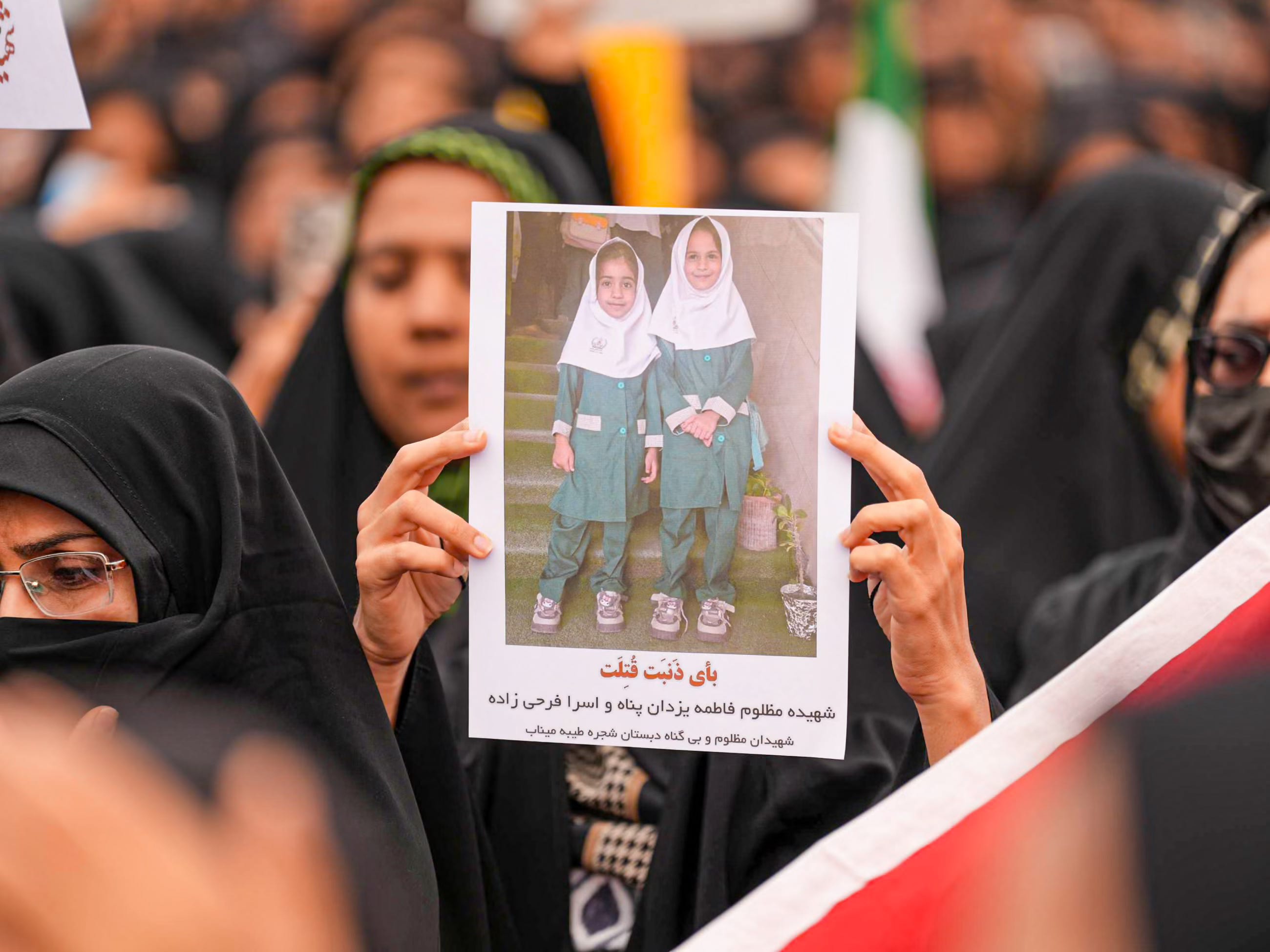
In just five days of bombardment, more than 1,200 people are reported to have been killed. Even on the first day of the strikes, the scenes were already devastating. In Minab, in southern Iran, more than 170 students were reportedly killed, including at least 108 schoolgirls between the ages of seven and twelve when a strike hit their school.
But the victims were not only children in classrooms. That same day, further west in Lamerd, a missile struck a sports hall where teenage girls had gathered for athletic practice, killing at least 20 members of a local girls’ volleyball team.
Still, as families bury their children and the country gathers in mourning, the numbers continue to grow by the day. They always do. And the cost of these so-called preemptive strikes becomes harder and harder to ignore.
It is easy to speak about “preemption,” about strategic calculations and military necessity. But history has shown how easily those words can obscure the human reality that follows.
We have seen this logic before — long before the Al-Shifa bombing in Sudan. Again and again, we see the power that an assumption of threat has to move people, mobilize forces, and postpone the burden of proof until it is too late. And each time, the price is paid not by those who invoke the language of urgency, but by the civilians who must live and die beneath it.